Suffix Tree Algorithm
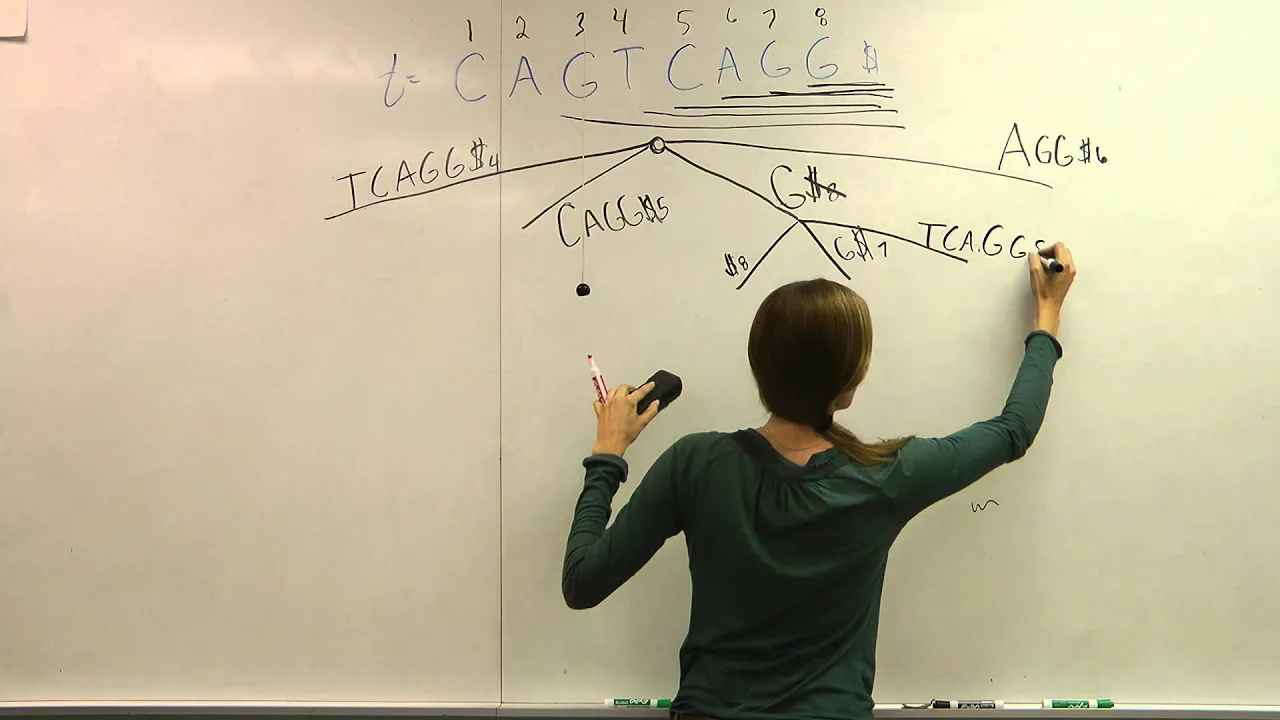
In computer science, a suffix tree is a compressed trie containing all the suffixes of a given text as their keys and positions in the text as their values. Suffix trees allow particularly fast implementations of many important string operations, such as substring search. They are used in bioinformatics applications, such as in the construction of the Burrows–Wheeler transform and in the compression of DNA sequences.
Video Explanation
Description
A suffix tree is a compressed tries of all the suffixes of a given string. It allows for efficient substring searching, pattern matching, and other operations on strings. Suffix trees provide a way to represent all substrings of a string in a space-efficient manner.
Problem Definition
-
Input:
- A string
Sof lengthn.
- A string
-
Output:
- A suffix tree representing all suffixes of
S.
- A suffix tree representing all suffixes of
Algorithm Overview
-
Construction:
- Build the suffix tree by inserting all suffixes of the string.
- Use an efficient algorithm (e.g., Ukkonen's algorithm) to construct the suffix tree in linear time.
-
Searching:
- Traverse the suffix tree to search for patterns and substrings efficiently.
Time Complexity
- Construction:
O(n)(for efficient algorithms like Ukkonen's). - Search:
O(m)for a pattern of lengthm.
Space Complexity
O(n)for storing the suffix tree.
C++ Implementation
Below is a simple implementation of a suffix tree. Note that a full implementation may require more complexity to handle various cases.
#include <iostream>
#include <map>
#include <vector>
#include <string>

using namespace std;

struct SuffixTreeNode {
    map<char, SuffixTreeNode*> children;
    int start, *end;
    int suffixIndex;
};

class SuffixTree {
public:
    SuffixTreeNode* root;
    string text;

    SuffixTree(const string& text) {
        this->text = text;
        root = new SuffixTreeNode();
        root->start = -1;
        root->end = new int(-1);
        buildSuffixTree();
    }

    void buildSuffixTree() {
        int n = text.size();
        for (int i = 0; i < n; i++) {
            insertSuffix(i);
        }
    }

    void insertSuffix(int index) {
        SuffixTreeNode* currentNode = root;
        for (int i = index; i < text.size(); i++) {
            char currentChar = text[i];
            if (currentNode->children.find(currentChar) == currentNode->children.end()) {
                currentNode->children[currentChar] = new SuffixTreeNode();
            }
            currentNode = currentNode->children[currentChar];
        }
        currentNode->suffixIndex = index;
    }
};

int main() {
    string text = "banana";
    SuffixTree suffixTree(text);
    cout << "Suffix tree constructed for: " << text << endl;
    return 0;
}
Conclusion
The suffix tree is a powerful data structure for string matching and pattern searching. It allows for efficient construction and searching of substrings in linear time. Suffix trees are widely used in bioinformatics and other applications where string operations are required.
Test Your Understanding
Answer these 3 questions to check what you have learned.
What is the main topic of this documentation page?
What should be identified before implementing suffix tree algorithm?
How is understanding of suffix tree algorithm best checked?
Done with this topic? Mark it as complete to track your progress.
Was this page helpful?
Discuss this page
Have a question or spot something confusing in "Suffix Tree Algorithm"? Ask below. Backed by GitHub Discussions—maintainers receive system notifications directly.