Introduction of Circular
Introduction
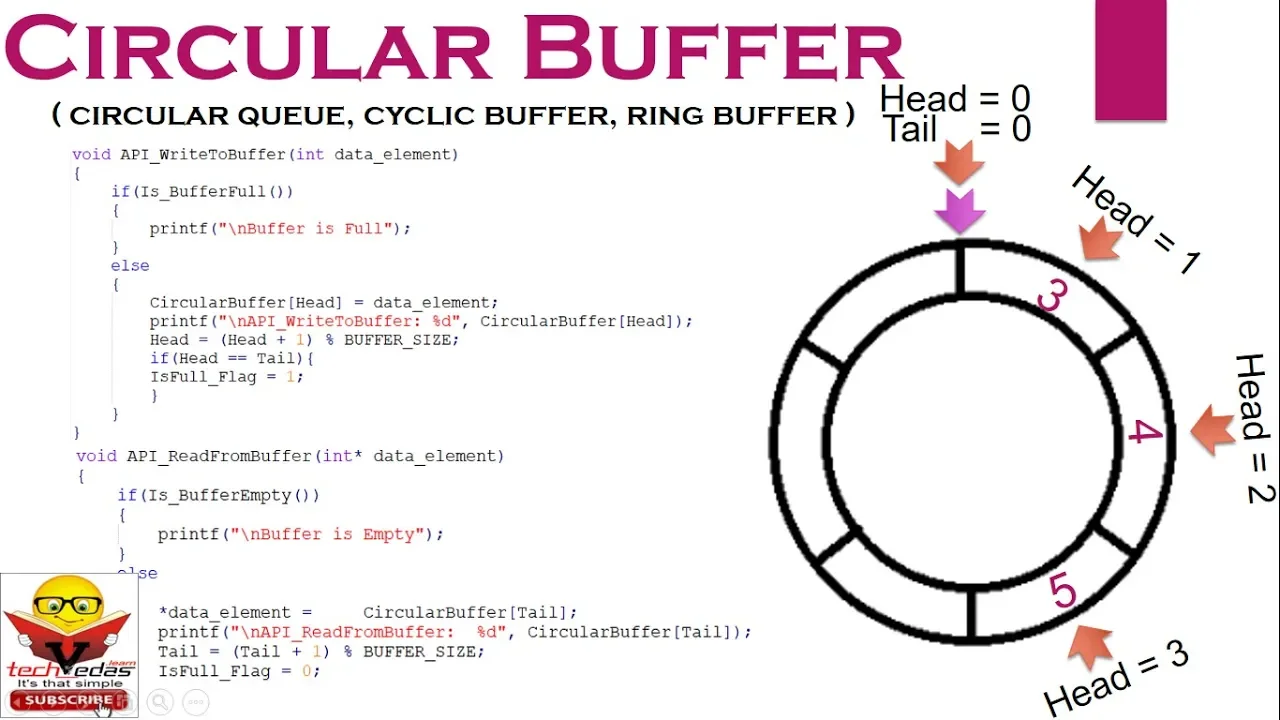
A circular array (or circular buffer) is a linear data structure that wraps around to the beginning once it reaches the end. It is used in scenarios where we need a fixed-size buffer that can overwrite old data with new data, such as in queue operations or buffering systems.
Video Explanation
Key Features
- Fixed Size: The array has a fixed capacity.
- Circular Nature: When you reach the end, the next element is placed at the beginning of the array.
- Efficient Usage: Enables optimal memory usage by reusing space without reallocating the array.
Use Cases
- Circular Queue Implementations: Useful for implementing queue structures where the oldest data gets replaced by new entries when capacity is full.
- Buffering Systems: Common in audio/video buffering or any system that needs constant data flow with limited memory.
Basic Operations
- Initialization: Setting up the array with a fixed size and pointers for start (
front) and end (rear). - Insertion (Enqueue): Adding an element at the rear and updating the position circularly.
- Deletion (Dequeue): Removing an element from the front and updating the position circularly.
- Check Full/Empty Status: Methods to check if the array is full or empty.
Implementation Example (Python)
Here is an example in Python to demonstrate the circular array:
class CircularArray:
    def __init__(self, size):
        self.size = size
        self.array = [None] * size
        self.front = -1
        self.rear = -1

    def is_empty(self):
        return self.front == -1

    def is_full(self):
        return (self.rear + 1) % self.size == self.front

    def enqueue(self, value):
        if self.is_full():
            print("The circular array is full. Cannot enqueue.")
            return
        if self.front == -1:
            self.front = 0
        self.rear = (self.rear + 1) % self.size
        self.array[self.rear] = value
        print(f"Enqueued: {value}")

    def dequeue(self):
        if self.is_empty():
            print("The circular array is empty. Cannot dequeue.")
            return None
        value = self.array[self.front]
        if self.front == self.rear:
            self.front = -1
            self.rear = -1
        else:
            self.front = (self.front + 1) % self.size
        print(f"Dequeued: {value}")
        return value

    def display(self):
        if self.is_empty():
            print("The circular array is empty.")
            return
        index = self.front
        print("Circular Array Elements: ", end="")
        while True:
            print(self.array[index], end=" ")
            if index == self.rear:
                break
            index = (index + 1) % self.size
        print()
Java Implementation
public class CircularArray {
    private int[] array;
    private int front;
    private int rear;
    private int size;

    public CircularArray(int size) {
        this.size = size;
        array = new int[size];
        front = -1;
        rear = -1;
    }

    public boolean isEmpty() {
        return front == -1;
    }

    public boolean isFull() {
        return (rear + 1) % size == front;
    }

    public void enqueue(int value) {
        if (isFull()) {
            System.out.println("The circular array is full. Cannot enqueue.");
            return;
        }
        if (front == -1) {
            front = 0;
        }
        rear = (rear + 1) % size;
        array[rear] = value;
        System.out.println("Enqueued: " + value);
    }

    public int dequeue() {
        if (isEmpty()) {
            System.out.println("The circular array is empty. Cannot dequeue.");
            return -1;
        }
        int value = array[front];
        if (front == rear) {
            front = -1;
            rear = -1;
        } else {
            front = (front + 1) % size;
        }
        System.out.println("Dequeued: " + value);
        return value;
    }

    public void display() {
        if (isEmpty()) {
            System.out.println("The circular array is empty.");
            return;
        }
        System.out.print("Circular Array Elements: ");
        int index = front;
        while (true) {
            System.out.print(array[index] + " ");
            if (index == rear) {
                break;
            }
            index = (index + 1) % size;
        }
        System.out.println();
    }

    public static void main(String[] args) {
        CircularArray ca = new CircularArray(5);
        ca.enqueue(10);
        ca.enqueue(20);
        ca.enqueue(30);
        ca.display();
        ca.dequeue();
        ca.display();
    }
}
C++ Implementation
#include <iostream>
using namespace std;

class CircularArray {
private:
    int *array;
    int front, rear, size;

public:
    CircularArray(int s) {
        size = s;
        array = new int[size];
        front = -1;
        rear = -1;
    }

    ~CircularArray() {
        delete[] array;
    }

    bool isEmpty() {
        return front == -1;
    }

    bool isFull() {
        return (rear + 1) % size == front;
    }

    void enqueue(int value) {
        if (isFull()) {
            cout << "The circular array is full. Cannot enqueue." << endl;
            return;
        }
        if (front == -1) {
            front = 0;
        }
        rear = (rear + 1) % size;
        array[rear] = value;
        cout << "Enqueued: " << value << endl;
    }

    int dequeue() {
        if (isEmpty()) {
            cout << "The circular array is empty. Cannot dequeue." << endl;
            return -1;
        }
        int value = array[front];
        if (front == rear) {
            front = -1;
            rear = -1;
        } else {
            front = (front + 1) % size;
        }
        cout << "Dequeued: " << value << endl;
        return value;
    }

    void display() {
        if (isEmpty()) {
            cout << "The circular array is empty." << endl;
            return;
        }
        cout << "Circular Array Elements: ";
        int index = front;
        while (true) {
            cout << array[index] << " ";
            if (index == rear) {
                break;
            }
            index = (index + 1) % size;
        }
        cout << endl;
    }
};

int main() {
    CircularArray ca(5);
    ca.enqueue(10);
    ca.enqueue(20);
    ca.enqueue(30);
    ca.display();
    ca.dequeue();
    ca.display();
    return 0;
}
Complexity Analysis
- Time Complexity:
- Enqueue/Dequeue: for insertion and deletion.
- Space Complexity: , where is the fixed size of the circular array.
Potential Issues and Solutions
- Overflow: Can occur if elements are added without checking if the array is full.
- Solution: Implement the
is_full()method to prevent enqueueing when the array is at capacity.
- Solution: Implement the
- Underflow: Attempting to dequeue from an empty array.
- Solution: Implement the
is_empty()method to handle this gracefully.
- Solution: Implement the
Track Your Progress
Done with this topic? Mark it as complete to track your progress.
Was this page helpful?
💬
Discuss this page
Have a question or spot something confusing in "Introduction of Circular"? Ask below. Backed by GitHub Discussions—maintainers receive system notifications directly.