Functions in C#
Functions in C#
Functions, also known as methods, in C# are blocks of code that perform a specific task. They help modularize code and promote reusability.
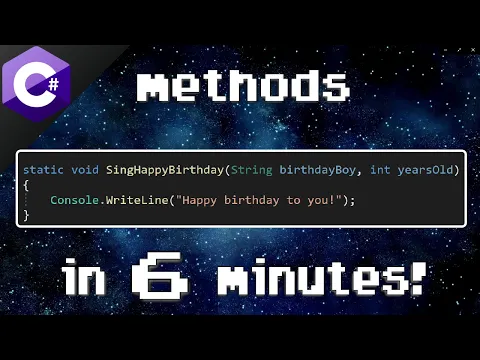
Video Explanation
1. Structure of a Function
The basic structure of a function in C# includes an access modifier, return type, name, parameters (optional), and a body.
[access_modifier] return_type FunctionName([parameters]) {
    // Function body
}
Example:
public int Add(int a, int b) {
    return a + b;
}
2. Access Modifiers
C# functions use access modifiers to control their visibility and accessibility:
- public: Accessible from any class.
- private: Accessible only within the containing class.
- protected: Accessible within the containing class and derived classes.
- internal: Accessible within the same assembly.
- protected internal: Accessible within the same assembly or derived classes.
3. Return Types
A function in C# can have any data type as its return type or be void if it returns no value.
Example:
public int Multiply(int x, int y) {
    return x * y; // returns an integer
}

public void DisplayMessage() {
    Console.WriteLine("Hello, World!"); // returns no value
}
4. Parameters and Arguments
Functions can take parameters as input. Parameters are defined in the function signature, and arguments are the actual values passed.
Example:
public int Subtract(int a, int b) {
    return a - b;
}

// Usage
int result = Subtract(10, 5); // Passes 10 and 5 as arguments
5. Method Overloading
Method overloading allows multiple methods to have the same name but different parameters.
Example:
public int Add(int a, int b) {
    return a + b;
}

public double Add(double a, double b) {
    return a + b;
}
6. Static Methods
Static methods belong to the class rather than an instance and can be called directly using the class name.
Example:
public static void PrintMessage() {
    Console.WriteLine("This is a static method.");
}

// Usage
ClassName.PrintMessage();
7. Recursive Functions
A recursive function is one that calls itself until a base condition is met.
Example:
public int Factorial(int n) {
    if (n <= 1) return 1;
    return n * Factorial(n - 1);
}
8. Lambda Expressions
Lambda expressions provide a concise syntax to define anonymous functions.
Example:
Func<int, int> square = x => x * x;
Console.WriteLine(square(5)); // Outputs: 25
9. Async Functions
Async functions allow asynchronous programming, making use of the async and await keywords.
Example:
public async Task<string> GetDataAsync() {
    await Task.Delay(1000); // Simulates asynchronous operation
    return "Data loaded";
}
Summary
Functions are essential in C# for creating reusable, organized, and maintainable code. Understanding the types, access modifiers, and usage of functions will enhance your programming capabilities.
Happy coding!
Done with this topic? Mark it as complete to track your progress.
Was this page helpful?
Discuss this page
Have a question or spot something confusing in "Functions in C#"? Ask below. Backed by GitHub Discussions—maintainers receive system notifications directly.