What is Data Structures and Algorithms (DSA)?
If you ask any seasoned developer what separates a junior coder from a senior software engineer, the answer almost always comes down to one thing: Data Structures and Algorithms (DSA).
At its core, programming is about two things: managing information and solving problems. DSA is the definitive toolkit for doing both efficiently. Think of data structures as the way we organize our digital workspace, and algorithms as the step-by-step instructions we use to get the job done.
Video Explanation
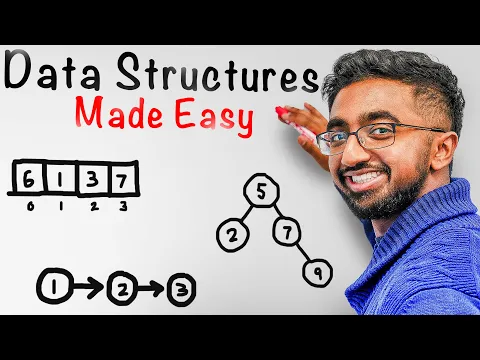
What Are Data Structures?
A data structure is a specialized format for organizing, storing, and managing data in a computer's memory.
Think of it like a kitchen. You could throw all your utensils, spices, and pots into a giant pile on the floor. It technically stores them, but good luck finding the garlic powder when dinner is burning. Instead, you use spice racks, silverware drawers, and cupboards.
In programming, choosing the wrong data structure means your code runs slowly and hogs memory. Choosing the right one makes your data accessible in a fraction of a millisecond.
The Essential Data Structures
While there are dozens of specialized structures, you will use these core types most often:
- Arrays & Linked Lists: The foundational structures. Arrays store items right next to each other in memory (great for quick access), while Linked Lists scatter items and link them with pointers (great for quick insertions and deletions).
- Stacks & Queues: Linear collections governed by strict rules. Stacks use LIFO (Last-In, First-Out—like a stack of dinner plates), while Queues use FIFO (First-In, First-Out—like a line at a coffee shop).
- Trees & Graphs: Non-linear structures used for complex relationships. Trees represent hierarchies (like a folder directory), while Graphs map networks (like social media friendships or flight routes).
- Hash Tables: High-performance structures that pair keys to values, allowing you to look up data almost instantly (like looking up a word in a dictionary).
What Are Algorithms?
An algorithm is simply a step-by-step set of instructions for solving a specific problem. If a data structure is your kitchen layout, the algorithm is the recipe.
An algorithm takes some input (like raw ingredients), processes it through a series of logical, repeatable steps, and delivers an output (a perfectly baked cake).
In the real world, there are hundreds of ways to solve a single coding problem. The goal of studying algorithms is learning how to find the most efficient path, using the least amount of time and computer memory.
Common Algorithmic Strategies
Instead of memorizing every algorithm in existence, developers focus on mastering these core paradigms:
- Searching & Sorting: The bedrock of data manipulation. This includes everything from organizing an unarranged list (like Merge Sort or Quicksort) to finding a needle in a haystack (like Binary Search).
- Divide and Conquer: Breaking a massive, intimidating problem down into smaller, bite-sized subproblems, solving those first, and combining the results.
- Greedy Algorithms: Making the absolute best, most optimal choice at each immediate step without worrying about the future (like Dijkstra’s algorithm finding the shortest path on a map).
- Dynamic Programming: A smart strategy where you break a problem down, solve the subproblems, and cache (save) those answers so you never have to waste processing power recalculating them.
Why Does DSA Actually Matter?
It is easy to look at DSA and think, "Why do I need to learn this if my programming language already has built-in sorting functions?"
Here is why mastering DSA is a non-negotiable step in your coding journey:
1. It Changes How You Think (Algorithmic Thinking)
Learning DSA stops you from writing code by trial-and-error. It teaches you how to look at a messy, complex real-world problem, break it down logically, and architect a clean solution before you even type your first line of code.
2. Scalability and Optimization
Any poorly written script can handle 10 user records. But what happens when your app grows to 10 million users? A bad data structure choice can cause a server to crash under heavy load. DSA teaches you how to write code that scales gracefully.
The Reality of Technical Interviews: Tech giants like Google, Meta, and Amazon—as well as fast-growing startups—rely heavily on DSA problems to vet candidates. They don't just want to see if you can write code; they want to see how you solve problems under pressure.
How to Get Started
Don't try to learn everything at once. The best way to build your DSA muscle is a two-step loop:
- Learn a concept (e.g., learn how a Stack works).
- Code it from scratch, then solve 3 to 5 practice problems using it on platforms like LeetCode or HackerRank.
With time, you will stop viewing code as just a series of syntax rules, and start seeing it for what it truly is: a beautiful exercise in problem-solving.
Related Topics
Done with this topic? Mark it as complete to track your progress.
Was this page helpful?
Discuss this page
Have a question or spot something confusing in "What is Data Structures and Algorithms (DSA)?"? Ask below. Backed by GitHub Discussions—maintainers receive system notifications directly.