A* Search Algorithm
The A* (A-Star) Search Algorithm is one of the most popular and efficient pathfinding algorithms. It finds the shortest path between a start and goal node by combining the strengths of Dijkstra's Algorithm (guaranteed shortest path) and Greedy Best-First Search (speed via heuristics).
A* is widely used in game development, robotics, GPS navigation, and AI because it is both optimal and complete — it always finds the shortest path if one exists, and does so efficiently using heuristic guidance.
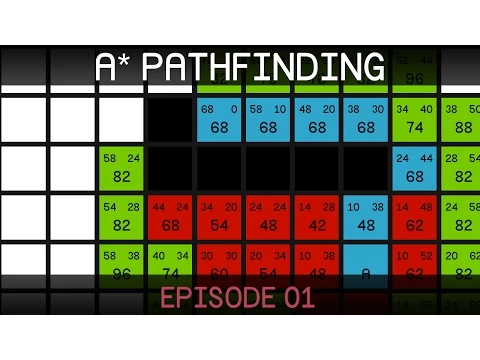
Video Explanation
Interactive Visualization
Click on the grid below to place a Start (S), End (E), and Walls. Then press Visualize to watch the A* algorithm explore the grid in real-time.
A* Search Pathfinding Engine
An interactive dashboard evaluating structural matrices using shortest path node heuristics.
How It Works
A* maintains two key values for every node:
- g(n) — the actual cost from the start node to node
n - h(n) — the estimated (heuristic) cost from node
nto the goal - f(n) = g(n) + h(n) — the total estimated cost of the cheapest path through
n
Algorithm Steps
- Add the start node to the open set (priority queue)
- While the open set is not empty:
- Pick the node with the lowest f(n)
- If it's the goal, reconstruct and return the path
- Move it to the closed set (already evaluated)
- For each neighbor:
- Skip if it's in the closed set or is a wall
- Calculate tentative
gscore - If this path to the neighbor is better than any previously known:
- Update
g(n)andf(n) - Record the parent for path reconstruction
- Add/update it in the open set
- Update
- If the open set is empty and the goal was not reached → no path exists
Heuristic Functions
The choice of heuristic h(n) is crucial:
| Heuristic | Formula | Allowed Movements | Best For |
|---|---|---|---|
| Manhattan | 4-directional | Orthogonal grids (Rooks) | |
| Chebyshev | 8-directional | King moves (Equal diagonal cost) | |
| Euclidean | Straight line | Any-angle / Continuous space |
For A* to guarantee the optimal path, the heuristic must be admissible — it should never overestimate the actual cost to the goal. Manhattan distance is admissible for 4-directional grids.
Dry Run Example
Consider a 5×5 grid where S is start (0,0), E is end (4,4), and # are walls:
S . . . .
. # # . .
. . # . .
. . . # .
. . . . E
| Step | Current | g | h (Manhattan) | f = g+h | Action |
|---|---|---|---|---|---|
| 1 | (0,0) | 0 | 8 | 8 | Start — expand neighbors |
| 2 | (0,1) | 1 | 7 | 8 | Expand (no wall) |
| 3 | (1,0) | 1 | 7 | 8 | Expand (no wall) |
| 4 | (0,2) | 2 | 6 | 8 | Continue exploring... |
| ... | ... | ... | ... | ... | ... |
| Final | (4,4) | 8 | 0 | 8 | Goal reached! |
The algorithm finds the shortest path of length 8 while exploring far fewer nodes than BFS would.
Complexity Analysis
| Metric | Value |
|---|---|
| Time Complexity | O(E log V) with a binary heap |
| Space Complexity | O(V) |
| Optimality | ✅ Guaranteed (with admissible heuristic) |
| Completeness | ✅ Will find a path if one exists |
Where V = number of vertices (cells), E = number of edges (connections).
A* vs Other Pathfinding Algorithms
| Feature | A* | Dijkstra | BFS | Greedy Best-First |
|---|---|---|---|---|
| Uses heuristic | ✅ | ❌ | ❌ | ✅ |
| Optimal path | ✅ | ✅ | ✅ (unweighted) | ❌ |
| Speed | ⚡ Fast | 🐢 Slower | 🐢 Slower | ⚡⚡ Fastest |
| Weighted edges | ✅ | ✅ | ❌ | ✅ |
| Best for | Pathfinding with obstacles | All shortest paths | Unweighted graphs | Speed over accuracy |
Rule of thumb:
- Use A* when you need the optimal path quickly with a good heuristic
- Use Dijkstra when there's no natural heuristic (or you need all shortest paths)
- Use BFS for simple unweighted graphs
- Use Greedy Best-First when speed matters more than optimality
Implementations
Python
import heapq

def astar(grid, start, end):
    rows, cols = len(grid), len(grid[0])

    def heuristic(a, b):
        return abs(a[0] - b[0]) + abs(a[1] - b[1])  # Manhattan distance

    open_set = []
    heapq.heappush(open_set, (0, start))
    came_from = {}
    g_score = {start: 0}

    while open_set:
        _, current = heapq.heappop(open_set)

        if current == end:
            # Reconstruct path
            path = []
            while current in came_from:
                path.append(current)
                current = came_from[current]
            path.append(start)
            return path[::-1]

        for dr, dc in [(-1, 0), (1, 0), (0, -1), (0, 1)]:
            neighbor = (current[0] + dr, current[1] + dc)
            nr, nc = neighbor

            if 0 <= nr < rows and 0 <= nc < cols and grid[nr][nc] != 1:
                tentative_g = g_score[current] + 1

                if tentative_g < g_score.get(neighbor, float('inf')):
                    came_from[neighbor] = current
                    g_score[neighbor] = tentative_g
                    f = tentative_g + heuristic(neighbor, end)
                    heapq.heappush(open_set, (f, neighbor))

    return None  # No path found

# Example usage
grid = [
    [0, 0, 0, 0, 0],
    [0, 1, 1, 0, 0],
    [0, 0, 1, 0, 0],
    [0, 0, 0, 1, 0],
    [0, 0, 0, 0, 0],
]
path = astar(grid, (0, 0), (4, 4))
print(path)  # [(0,0), (1,0), (2,0), (2,1), (3,0), (3,1), (3,2), (4,3), (4,4)]
Java
import java.util.*;

public class AStarSearch {

    static int[] dx = {-1, 1, 0, 0};
    static int[] dy = {0, 0, -1, 1};

    static int heuristic(int[] a, int[] b) {
        return Math.abs(a[0] - b[0]) + Math.abs(a[1] - b[1]);
    }

    static List<int[]> astar(int[][] grid, int[] start, int[] end) {
        int rows = grid.length, cols = grid[0].length;
        // Priority queue: {f, g, row, col}
        PriorityQueue<int[]> openSet = new PriorityQueue<>(Comparator.comparingInt(a -> a[0]));
        Map<String, String> cameFrom = new HashMap<>();
        Map<String, Integer> gScore = new HashMap<>();

        String startKey = start[0] + "," + start[1];
        gScore.put(startKey, 0);
        openSet.offer(new int[]{heuristic(start, end), 0, start[0], start[1]});

        while (!openSet.isEmpty()) {
            int[] current = openSet.poll();
            int cr = current[2], cc = current[3];
            String currentKey = cr + "," + cc;

            if (cr == end[0] && cc == end[1]) {
                // Reconstruct path
                List<int[]> path = new ArrayList<>();
                String key = currentKey;
                while (key != null) {
                    String[] parts = key.split(",");
                    path.add(0, new int[]{Integer.parseInt(parts[0]), Integer.parseInt(parts[1])});
                    key = cameFrom.get(key);
                }
                return path;
            }

            for (int d = 0; d < 4; d++) {
                int nr = cr + dx[d], nc = cc + dy[d];
                if (nr < 0 || nr >= rows || nc < 0 || nc >= cols || grid[nr][nc] == 1)
                    continue;

                String neighborKey = nr + "," + nc;
                int tentativeG = gScore.getOrDefault(currentKey, Integer.MAX_VALUE) + 1;

                if (tentativeG < gScore.getOrDefault(neighborKey, Integer.MAX_VALUE)) {
                    cameFrom.put(neighborKey, currentKey);
                    gScore.put(neighborKey, tentativeG);
                    int f = tentativeG + heuristic(new int[]{nr, nc}, end);
                    openSet.offer(new int[]{f, tentativeG, nr, nc});
                }
            }
        }
        return null; // No path found
    }

    public static void main(String[] args) {
        int[][] grid = {
            {0, 0, 0, 0, 0},
            {0, 1, 1, 0, 0},
            {0, 0, 1, 0, 0},
            {0, 0, 0, 1, 0},
            {0, 0, 0, 0, 0}
        };
        List<int[]> path = astar(grid, new int[]{0, 0}, new int[]{4, 4});
        if (path != null) {
            for (int[] p : path) System.out.println("(" + p[0] + ", " + p[1] + ")");
        }
    }
}
C++
#include <bits/stdc++.h>
using namespace std;

struct Node {
    int f, g, row, col;
    bool operator>(const Node& other) const { return f > other.f; }
};

int heuristic(int r1, int c1, int r2, int c2) {
    return abs(r1 - r2) + abs(c1 - c2);
}

vector<pair<int,int>> astar(vector<vector<int>>& grid, pair<int,int> start, pair<int,int> end) {
    int rows = grid.size(), cols = grid[0].size();
    int dx[] = {-1, 1, 0, 0};
    int dy[] = {0, 0, -1, 1};

    priority_queue<Node, vector<Node>, greater<Node>> openSet;
    map<pair<int,int>, pair<int,int>> cameFrom;
    map<pair<int,int>, int> gScore;

    gScore[start] = 0;
    openSet.push({heuristic(start.first, start.second, end.first, end.second), 0, start.first, start.second});

    while (!openSet.empty()) {
        auto [f, g, cr, cc] = openSet.top();
        openSet.pop();

        if (make_pair(cr, cc) == end) {
            // Reconstruct path
            vector<pair<int,int>> path;
            pair<int,int> cur = end;
            while (cameFrom.count(cur)) {
                path.push_back(cur);
                cur = cameFrom[cur];
            }
            path.push_back(start);
            reverse(path.begin(), path.end());
            return path;
        }

        for (int d = 0; d < 4; d++) {
            int nr = cr + dx[d], nc = cc + dy[d];
            if (nr < 0 || nr >= rows || nc < 0 || nc >= cols || grid[nr][nc] == 1)
                continue;

            int tentativeG = gScore[{cr, cc}] + 1;
            pair<int,int> neighbor = {nr, nc};

            if (!gScore.count(neighbor) || tentativeG < gScore[neighbor]) {
                cameFrom[neighbor] = {cr, cc};
                gScore[neighbor] = tentativeG;
                int newF = tentativeG + heuristic(nr, nc, end.first, end.second);
                openSet.push({newF, tentativeG, nr, nc});
            }
        }
    }
    return {}; // No path found
}

int main() {
    vector<vector<int>> grid = {
        {0, 0, 0, 0, 0},
        {0, 1, 1, 0, 0},
        {0, 0, 1, 0, 0},
        {0, 0, 0, 1, 0},
        {0, 0, 0, 0, 0}
    };
    auto path = astar(grid, {0, 0}, {4, 4});
    for (auto& [r, c] : path) cout << "(" << r << ", " << c << ")\n";
    return 0;
}
JavaScript
function astar(grid, start, end) {
  const rows = grid.length, cols = grid[0].length;
  const heuristic = (a, b) => Math.abs(a[0] - b[0]) + Math.abs(a[1] - b[1]);

  const openSet = new Map();
  const closedSet = new Set();
  const cameFrom = new Map();
  const gScore = new Map();

  const key = (r, c) => `${r},${c}`;
  const startKey = key(start[0], start[1]);
  const endKey = key(end[0], end[1]);

  gScore.set(startKey, 0);
  openSet.set(startKey, { f: heuristic(start, end), pos: start });

  while (openSet.size > 0) {
    // Find node with lowest f
    let currentKey = null, lowestF = Infinity;
    for (const [k, node] of openSet) {
      if (node.f < lowestF) { lowestF = node.f; currentKey = k; }
    }

    const current = openSet.get(currentKey);
    openSet.delete(currentKey);
    closedSet.add(currentKey);

    if (currentKey === endKey) {
      // Reconstruct path
      const path = [];
      let k = currentKey;
      while (cameFrom.has(k)) {
        const pos = cameFrom.get(k);
        path.unshift(pos);
        k = key(pos[0], pos[1]);
      }
      path.push(end);
      return path;
    }

    const [cr, cc] = current.pos;
    for (const [dr, dc] of [[-1,0],[1,0],[0,-1],[0,1]]) {
      const nr = cr + dr, nc = cc + dc;
      if (nr < 0 || nr >= rows || nc < 0 || nc >= cols || grid[nr][nc] === 1)
        continue;

      const neighborKey = key(nr, nc);
      if (closedSet.has(neighborKey)) continue;

      const tentativeG = (gScore.get(currentKey) || 0) + 1;
      if (tentativeG < (gScore.get(neighborKey) ?? Infinity)) {
        cameFrom.set(neighborKey, current.pos);
        gScore.set(neighborKey, tentativeG);
        const f = tentativeG + heuristic([nr, nc], end);
        openSet.set(neighborKey, { f, pos: [nr, nc] });
      }
    }
  }
  return null; // No path found
}

// Example usage
const grid = [
  [0, 0, 0, 0, 0],
  [0, 1, 1, 0, 0],
  [0, 0, 1, 0, 0],
  [0, 0, 0, 1, 0],
  [0, 0, 0, 0, 0],
];
console.log(astar(grid, [0, 0], [4, 4]));
Real-World Use Cases
- Game Development — NPC pathfinding in games (e.g., enemies navigating around obstacles)
- Robotics — Robot navigation in warehouse environments (e.g., Amazon warehouse robots)
- GPS Navigation — Finding shortest driving routes between two locations
- AI Planning — State-space search in puzzle solving (e.g., 15-puzzle, Rubik's Cube)
- Network Routing — Optimizing data packet routing through network nodes
Related LeetCode Problems
| Problem | Difficulty | Link |
|---|---|---|
| #1091 — Shortest Path in Binary Matrix | Medium | LeetCode |
| #752 — Open the Lock | Medium | LeetCode |
| #773 — Sliding Puzzle | Hard | LeetCode |
| #1293 — Shortest Path in a Grid with Obstacles Elimination | Hard | LeetCode |
Summary
- A* combines Dijkstra's guaranteed optimality with heuristic-guided speed
- Uses f(n) = g(n) + h(n) to prioritize which nodes to explore
- With an admissible heuristic, it guarantees the shortest path
- Typically much faster than BFS/Dijkstra for pathfinding in grids
- The choice of heuristic greatly affects performance — Manhattan distance is ideal for 4-directional grids
Done with this topic? Mark it as complete to track your progress.
Was this page helpful?
Discuss this page
Have a question or spot something confusing in "A* Search Algorithm"? Ask below. Backed by GitHub Discussions—maintainers receive system notifications directly.